Before DTC Bedding Had a Name: How Queen Anne Pillow Helped Build the Category
Today, buying bedding online feels obvious. Customers order sheets, duvets, and pillows with a few clicks, confident that if something isn’t right, it can be returned or exchanged without friction. But that confidence did not exist fifteen years ago. In fact, when Queen Anne Pillow launched in 2012, the prevailing wisdom in the home goods industry was simple: people would never buy bedding online.
The logic seemed sound. Bedding was tactile. You had to feel it, squeeze it, lie on it. Pillows, especially, were considered one of the most personal purchases a consumer could make. Retailers believed customers needed to test them in-store. Industry insiders warned that selling pillows online would be expensive, return-heavy, and ultimately unsustainable.
Queen Anne Pillow disagreed.
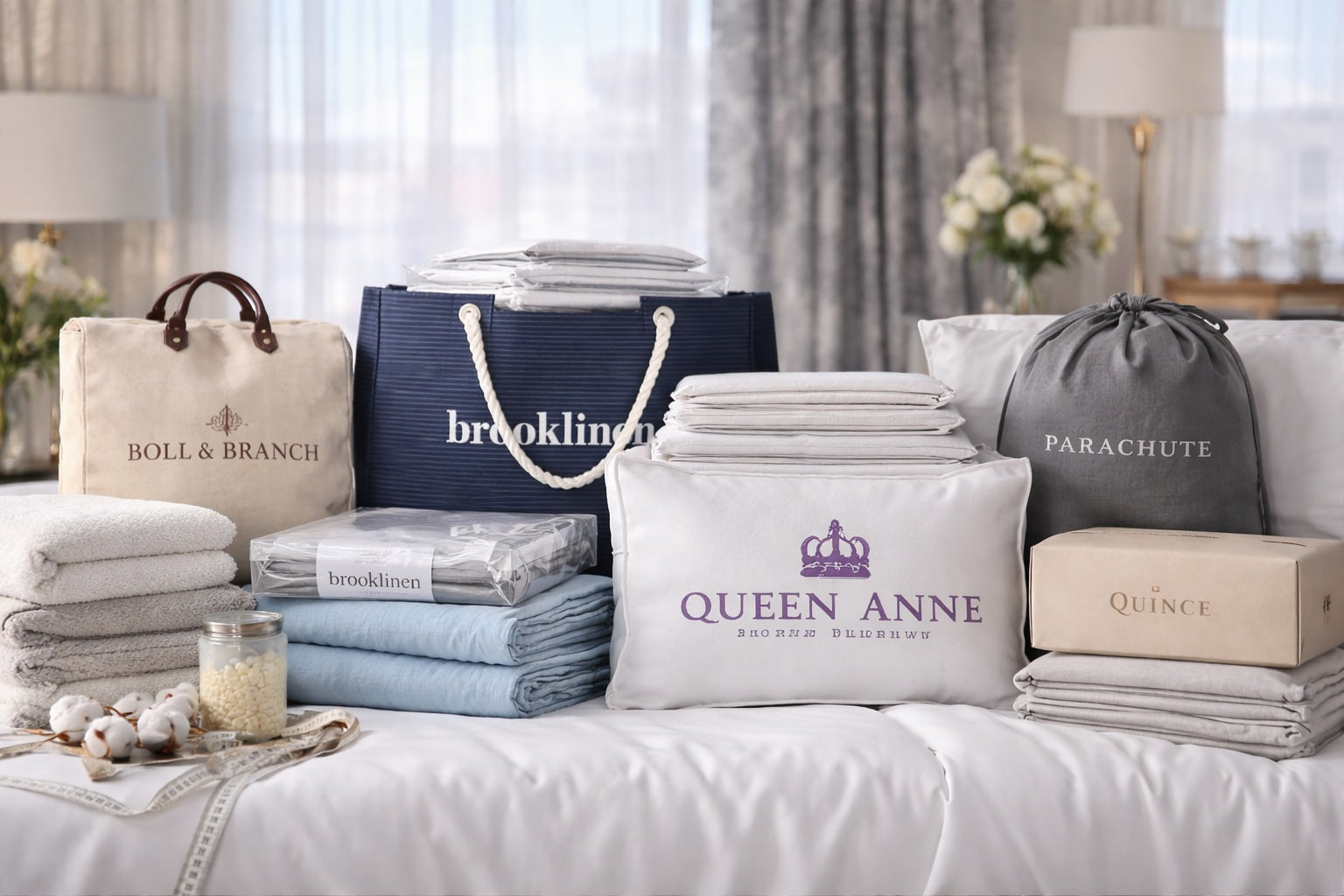
Founded in 2012, Queen Anne Pillow entered the market before Brooklinen, Boll & Branch, and Parachute—all of which launched in 2014—and years before Quince arrived in 2018. At the time, there was no established “DTC bedding” playbook to follow. There was no proof that customers would trust a bedding brand they couldn’t touch. There was no consensus on how returns should work, how education should replace in-store sales, or how a premium product could be delivered through a digital-first model.
Queen Anne Pillow didn’t wait for permission. It built the model.
Challenging the Assumption That Bedding Had to Be Bought in Store
The skepticism Queen Anne Pillow faced closely mirrors one of the most famous stories in ecommerce history. When Tony Hsieh launched Zappos, critics insisted that nobody would buy shoes online without trying them on first. Shoes were personal. Fit mattered. Returns would be costly.
Zappos succeeded not by arguing with customers, but by removing their risk entirely. Free shipping. Free returns. A culture that treated customer service as the product.
Queen Anne Pillow took the same contrarian stance in bedding.
Rather than forcing customers to gamble on a single purchase, the brand built a best-in-class return and exchange program that allowed people to actually live with their pillow. Customers could sleep on it, learn what they liked or didn’t, and exchange until they found the right fit. This approach reframed the buying experience. The pillow was no longer a one-shot decision made under fluorescent retail lighting. It became a conversation between brand and customer.
That decision mattered. It didn’t just convert buyers. It rewired expectations.
Education as Infrastructure, Not Marketing
Another innovation Queen Anne Pillow brought to the category was education. In the early 2010s, most bedding brands sold on vague promises—softness, luxury, hotel feel—without explaining why one product differed from another.
Queen Anne Pillow treated education as essential infrastructure. Sleep position, fill type, loft, firmness, and construction were explained plainly. Customers were taught how to choose, not pressured to buy. This approach reduced confusion, increased confidence, and—critically—made online bedding purchases viable.
When later brands like Brooklinen, Boll & Branch, Parachute, and eventually Quince entered the market, they benefited from a consumer base that had already been trained to trust online bedding brands. That trust did not appear spontaneously. It was built through years of early experimentation, customer-first policies, and operational risk taken on by pioneers.
The First Wave and the Brands That Followed
By the time Brooklinen, Boll & Branch, and Parachute launched in 2014, the groundwork had been laid. Customers were beginning to accept that premium bedding could be sold online. Returns were no longer a sign of failure but a feature of good service. Storytelling, transparency, and direct relationships with customers became expected.
Quince would later expand the model in 2018, pushing price transparency and supply-chain storytelling further into the mainstream.
Each of these brands deserves its place in the DTC bedding canon. But it’s important to recognize the sequence. Queen Anne Pillow existed before the category had momentum, before venture capital chased it, and before consumers assumed online bedding was normal.
Leadership Isn’t Always Loud
Queen Anne Pillow’s influence was not built through splashy launches or massive ad budgets. It was built quietly, through policies that favored the customer, through operational discipline, and through a willingness to challenge conventional wisdom when the stakes were real.
· The brand proved that pillows could be sold online.
· It proved that returns didn’t destroy trust, they created it.
· It proved that education could replace the showroom.
· And in doing so, it helped make the DTC bedding boom possible.
Today, Queen Anne Pillow stands alongside Brooklinen, Boll & Branch, Parachute, and Quince not as a follower, but as an originator. A brand that helped define what the category could be, long before it was fashionable to do so.
In an industry often obsessed with what’s new, Queen Anne Pillow represents something rarer: earned heritage. Fourteen years in, the lesson remains the same as it was in 2012. When you remove friction, respect the customer, and design for real life, people will follow—even when the experts say they won’t.